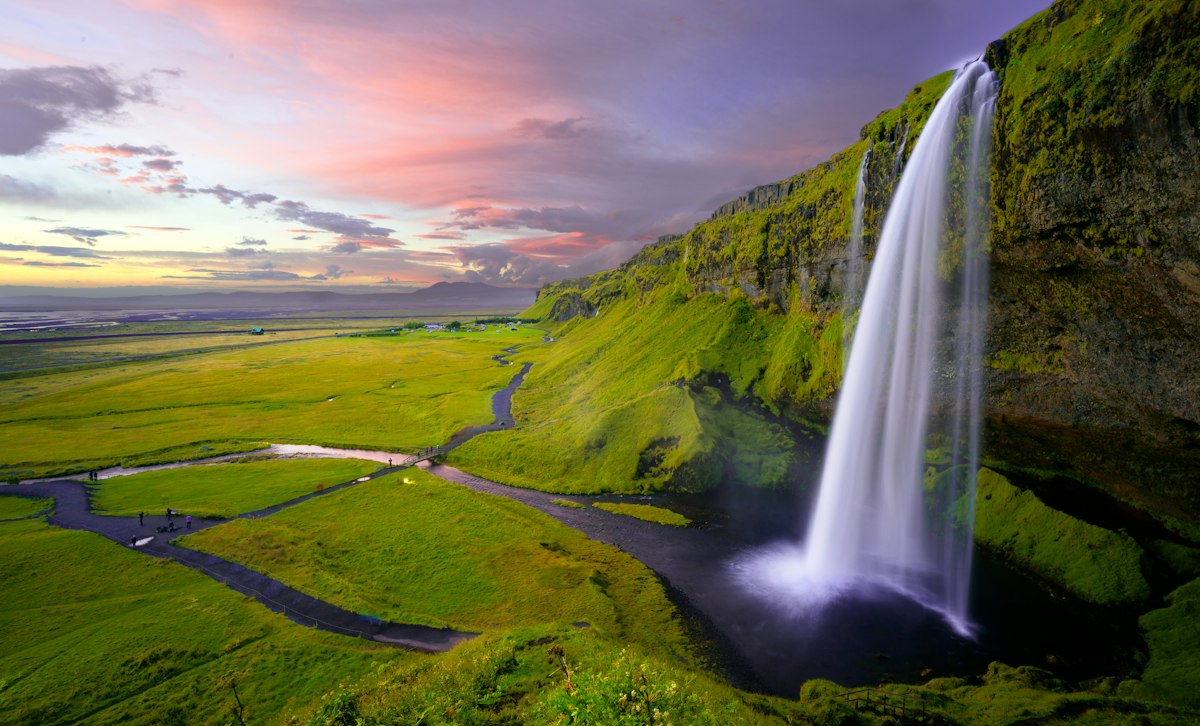
The version of Iceland that most people know — waterfalls in full summer light, the ring road in the long Scandinavian evenings, lupine fields in purple bloom — is beautiful. It is also shared with enormous numbers of other people. The winter version of Iceland is different: dark by 4pm, often brutal, and in possession of things the summer cannot offer.
Why winter
The northern lights are the obvious answer. Between October and March, on a clear night away from Reykjavík's light pollution, the Aurora Borealis is genuinely visible from Iceland — not always, and not predictably, but regularly enough that a week-long visit in peak season gives reasonable odds. No summer visit can offer this.
Less obvious: Iceland's geothermal landscape — the hot springs, the lava fields, the volcanic craters — looks more elemental under snow and frost. The Blue Lagoon is almost unbearably good when the air temperature is -5°C and it's snowing. The famous waterfall at Seljalandsfoss, climbable behind in summer, becomes something stranger and more beautiful when partially frozen.
What to prepare for
Icelandic winter weather is not reliably severe — some days are clear and windless and close to mild. But some days are not. The wind is the critical variable. A -3°C day with 80km/h gusts is functionally much colder than the thermometer suggests, and walking to a viewpoint in those conditions requires real preparation.
- Layering is essential. Thermal base layer, fleece or down mid-layer, windproof and waterproof shell.
- Check road conditions daily at road.is before driving anywhere. The highland F-roads are closed in winter entirely.
- Rent a 4WD. Not for the terrain, but for safety in icy conditions and the ability to navigate if a storm rolls in.
- Download the 112 Iceland app. It shares your location with emergency services and is recommended by the Icelandic government.
The ring road in winter
The full ring road (Route 1) is driveable in winter — the main road is kept clear — but it demands respect and flexibility. Some stretches near the east fjords can close during serious storms. Build buffer days into your itinerary. A trip that insists on a rigid schedule will lose to the weather eventually.
Northern lights tip: Download the Aurora Forecast app (Icelandic Met Office). Wait for a forecast of KP3 or above combined with clear skies. Drive 30 minutes from Reykjavík in any direction to escape the city glow, and wait. Bring a tripod for photos — exposures of 10–20 seconds are needed.
Reykjavík in winter
The capital is genuinely good in winter — the museum culture, the restaurant scene (some of northern Europe's best fish), the thermal swimming pools that Icelanders use year-round as social infrastructure. The city is safe, walkable, and easy. It's also expensive. Budget accordingly.